Care Fundamentals
Top-dressing for Lithops: quartz vs pumice vs lava rock
The three top-dressings most growers reach for, what each one actually does to surface temperature, evaporation, and stem rot risk.
What a top-dressing is for
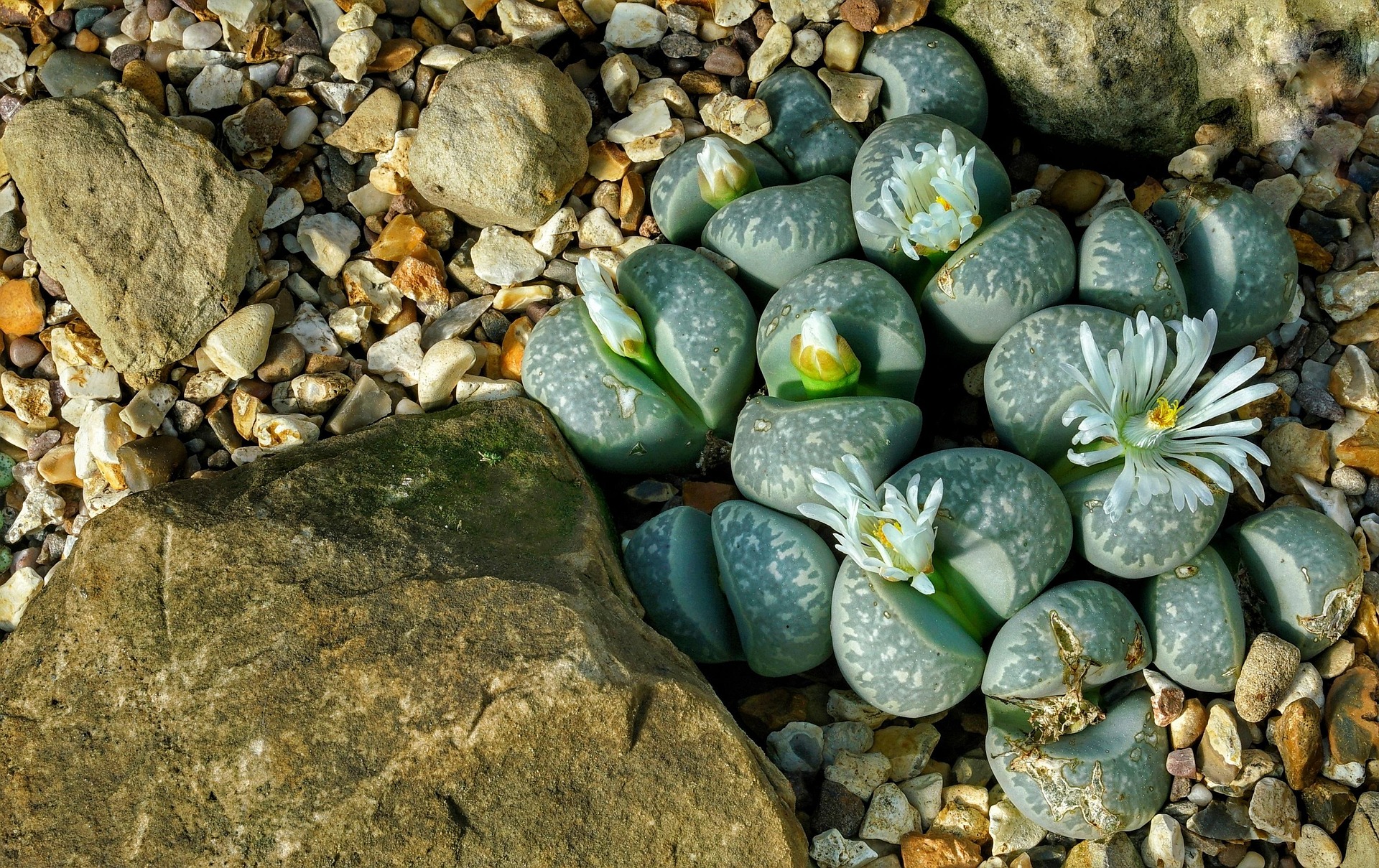
Top-dressing is the mineral layer that sits between the potting mix and the open air. Its job is not decoration. It keeps the cleft and the very base of the body dry between waterings, slows surface evaporation just enough to let the mix dry from the top down rather than from the rim inward, and stabilises the plant so the roots are not constantly worked loose.
Anything you choose has to be mineral, sharp-edged enough to lock together, and roughly the same particle size as the top layer of your mix. Soft, dusty, or organic mulches do the opposite of what you want — they hold moisture against the body and feed fungus.
Quartz, pumice, and lava compared
Quartz gravel (white or grey) reflects light back into the lower body, which is why habitat plants in the Northern Cape sit on quartz fields. It is heavy, drains instantly, and does not absorb water — perfect for species that hate damp cleft, like L. optica, L. helmutii, and the karasmontana complex.
Pumice is light, porous, and slightly water-retentive. It buffers temperature swings and is gentler on freshly repotted plants, but it dries more slowly than quartz, so it is a better fit for cooler indoor setups than for warm, humid summers.
Lava rock (scoria) sits between the two — porous like pumice but darker, so the surface runs warmer. Useful for growers in cool climates trying to push warmth into the substrate; risky in hot greenhouses where the dark surface can scorch the body.
Choosing for your climate
Hot and dry climate, outdoors: quartz, 5–8 mm, white or pale grey. Maximum reflection, fastest dry-back, no thermal trap.
Cool indoor windowsill: pumice or a 50/50 pumice and quartz blend. You want a bit of moisture buffering and you do not need the reflective surface as much.
Cold-winter greenhouse: lava on top, pumice in the mix. Slight thermal lift on bright days, fast drainage on cold ones.
Frequently asked questions
- Does coloured aquarium gravel work?
- No. Painted or coated gravels can leach pigment when wet and many have a glossy surface that holds a film of water against the body. Stick to natural quartz, pumice, lava, or granite chips.
- How thick should the top-dressing be?
- Enough to bury the very base of the body and cover the mix completely — typically 8 to 15 mm. The cleft and the green window stay above the layer.
- Will it slow growth?
- No. The roots are not in the top-dressing. It only affects what happens at the soil surface — evaporation, reflection, and how the cleft area dries.
Keep reading
Written by the Editorial Team. Spotted an error or want to add a regional note? Send corrections or apply to contribute.