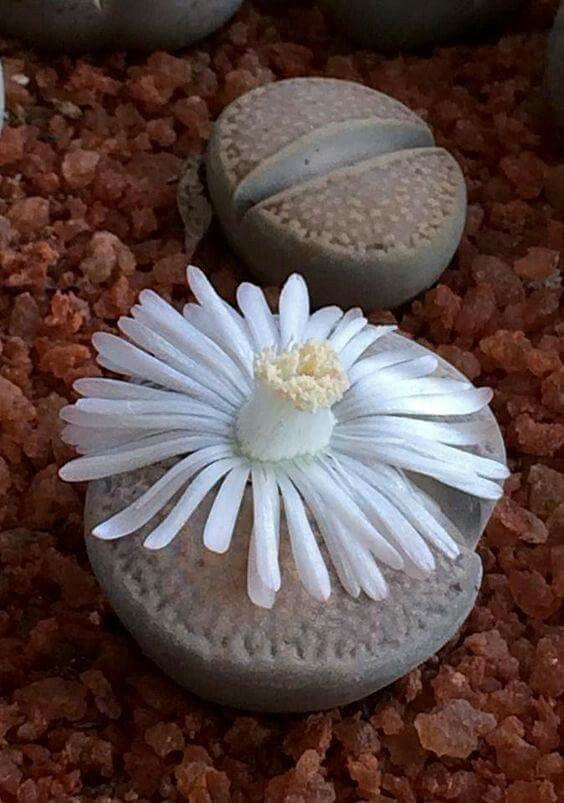
Photo: Community contribution — Unknown
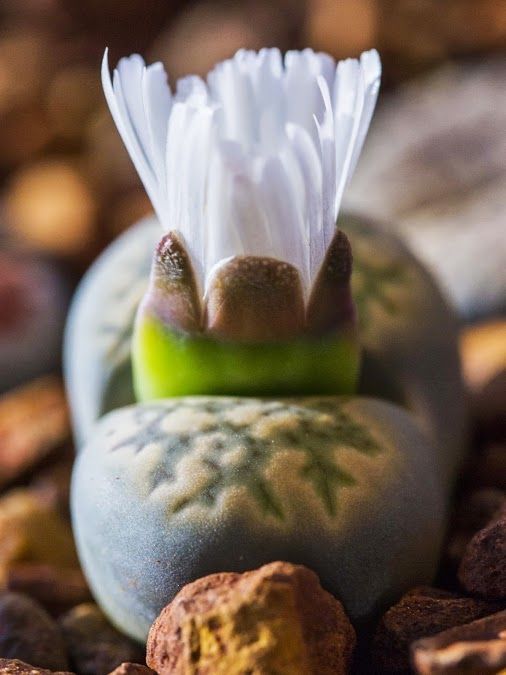
Photo: Community contribution — Unknown
Species profile
Lithops bromfieldii
Bromfield's living stone
- Origin
- Northern Cape, South Africa
- Flower
- Yellow
How to identify it
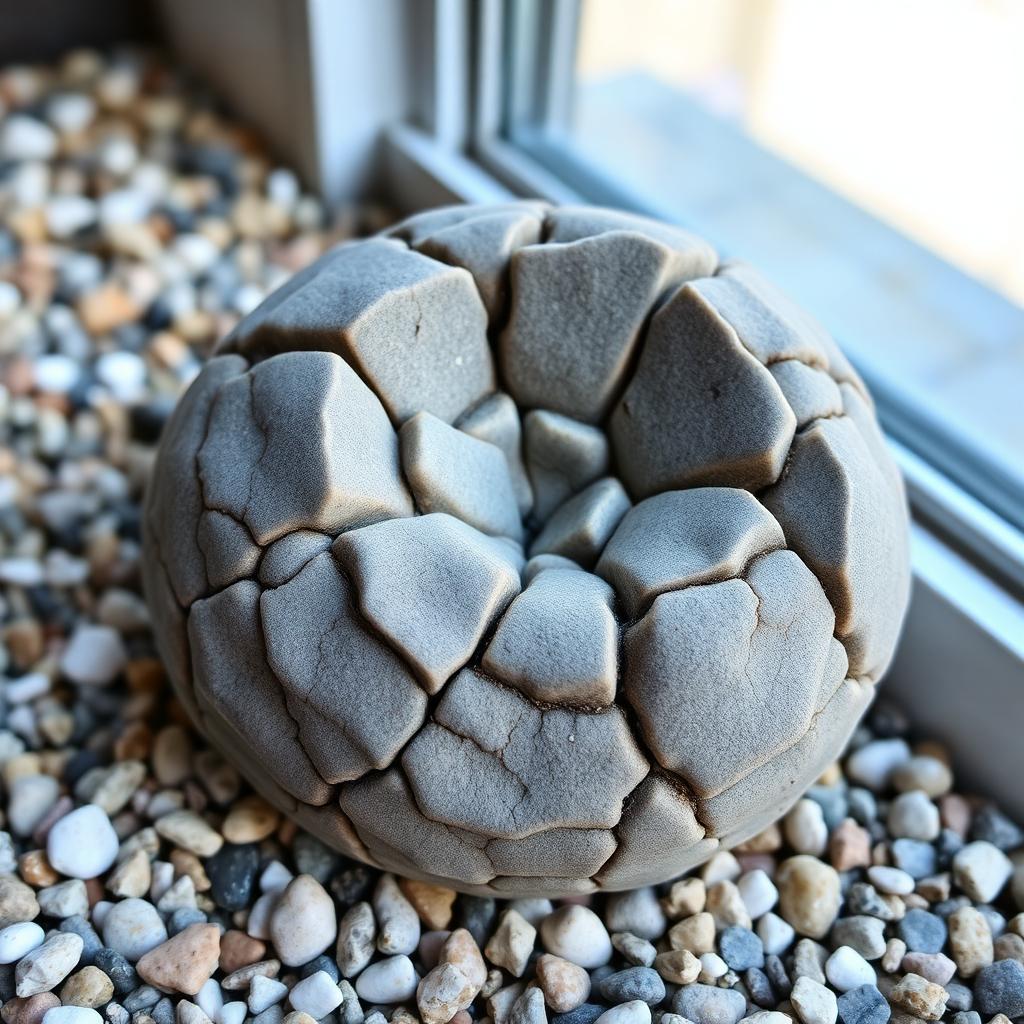
- Rusty-red to brick-toned body with strongly dendritic window markings.
- Multiple varieties recognized — colors range from red to olive-green.
vs. lookalikes: Compare against L. hookeri and L. lesliei from the same Northern Cape region — bromfieldii reads redder and more strongly dendritic across the window.
Care at a glance
| Light | Very bright light — a south-facing window (in the northern hemisphere) with 4+ hours of direct sun, or a grow light delivering roughly 25,000–35,000 lux for at least eight hours a day. Too little light produces tall, soft, pale bodies. |
|---|---|
| Watering | Deep but infrequent watering during the spring and autumn growth windows; allow the substrate to dry completely between waterings. Withhold all water from the first sign of the spring molt until the old leaves are fully papery, and through the high-summer dormancy. |
| Soil | Free-draining mineral mix — roughly 70–80% inorganic grit (pumice, lava rock, akadama, or coarse perlite) with 20–30% sieved low-nutrient organic matter. The substrate should drain in seconds and dry within 48 hours. |
| Dormancy | Summer dormancy from roughly late June through August (in the northern hemisphere); a lighter winter rest from November through January. Plants in the southern hemisphere shift by six months. |
| Temperature | Comfortable between 10 °C and 28 °C. Tolerates short excursions from 5 °C up to 35 °C in cultivation. Avoid sustained frost and prolonged heat above 32 °C. |
| Repotting | Every 3–4 years in early autumn, before the second growth window begins. Use a deep pot (at least 10 cm) to accommodate the long contractile roots. |
Growth & flowering
Like every Lithops, Lithops bromfieldii runs on a single annual cycle: a winter-to-spring molt produces a fresh leaf pair, a short late-spring growth window rebuilds reserves, summer is a dry rest, and autumn brings a second growth window plus a single daisy-like yellow flower per mature head. Flowers open in the early afternoon, close at dusk, and repeat for a few days.
First flowering typically arrives at three to five years from seed. Established plants flower most years if the autumn watering window is clean — bone-dry through high summer, then deep waterings resumed in early autumn at roughly two- to three-week intervals. Skipping a year is normal; persistent non-flowering points to light, age, or a disrupted dormancy. For the genus-wide molting and watering walkthroughs, see our Guides.
Common problems
Stacked or 'tower' growth
Fix: Caused by watering during the molt. Stop water as soon as a new pair is visible in the cleft and resume only when the old leaves are completely papery and dry.
Etiolation — tall, soft, pale bodies
Fix: Not enough light. Move to the brightest window available or supplement with a grow light; increase intensity gradually over one to two weeks to avoid scorching.
Soft brown rot at the base
Fix: Overwatering combined with poor drainage or cool temperatures. Unpot, cut away rotted tissue with a sterile blade, callus the wound for several days, and replant in a much drier mineral mix.
Cracked windows after a deep watering
Fix: Usually a plant that dehydrated too far before watering resumed. Rehydrate with smaller, lighter waterings over several weeks rather than one big soak.
Mealybugs in the cleft or roots
Fix: Spot-treat with 70% isopropyl alcohol on a cotton bud every 5–7 days for three weeks. Inspect roots at the next repot — root mealybugs are common on Lithops and easy to miss.
Contributed by
Reviewed by the Appsbarn editorial team. Are you a grower of Lithops bromfieldii? Co-author this profile.
Related species
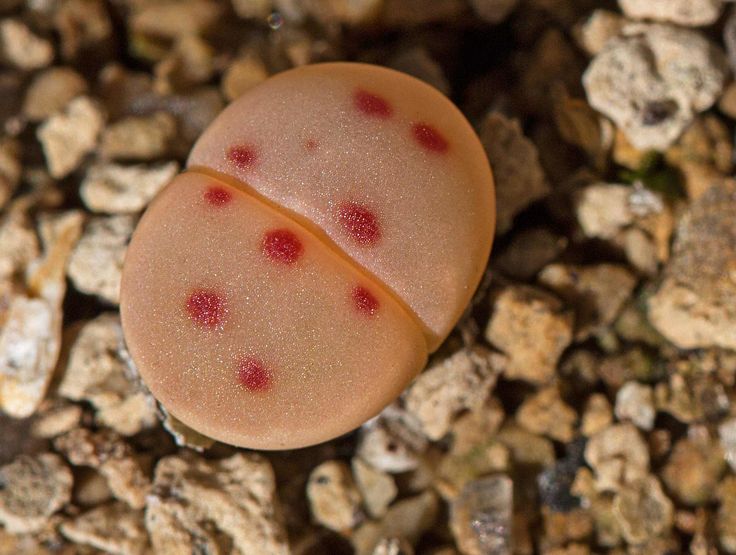
Lithops dinteri
Dinter's living stone
Brown-bodied with conspicuous red dots scattered across the windows.
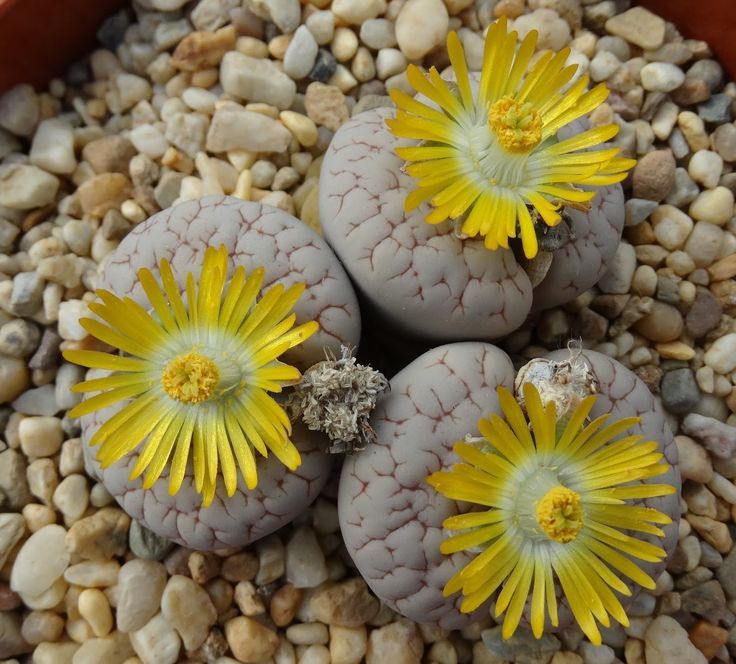
Lithops gracilidelineata
Slender-lined living stone
Pale, almost porcelain body etched with fine, hair-thin dark lines.
Lithops otzeniana
Otzen's living stone
Grey body with large, broken islands of color across the windows.
Share your photo of Lithops bromfieldii
We feature reader photos in species profiles, with credit. Submissions are reviewed before publishing.
Comments
Comments are moderated per our Community Guidelines. Please keep things on-topic — share your experience growing Lithops bromfieldii.
No comments yet. Be the first to share your experience.