Photo: richardmc (Pixabay) — Pixabay-Content-License
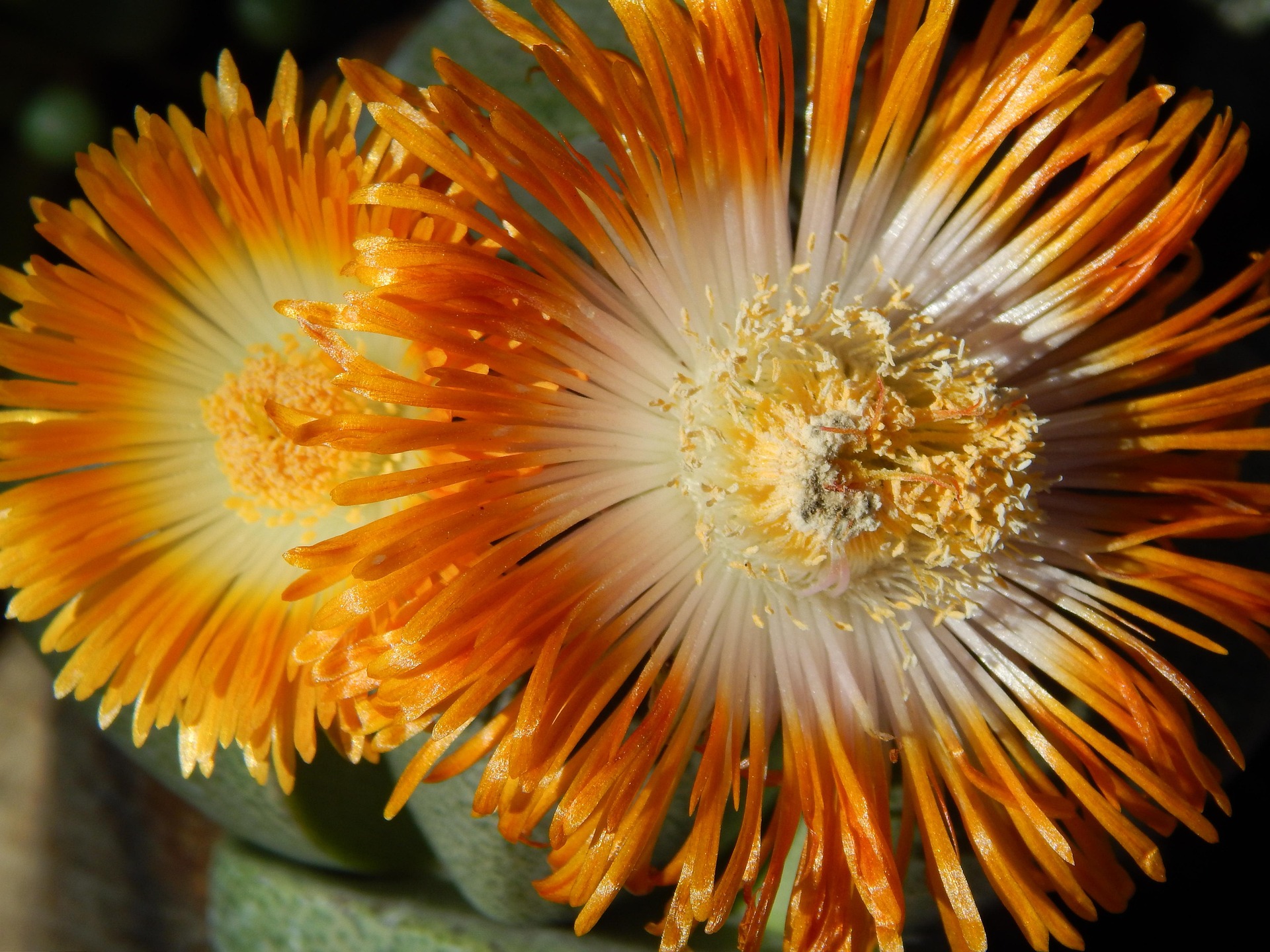
Photo: rayconser (Pixabay) — Pixabay-Content-License
Photo: Photographer (Pexels) — Pexels-License
Species profile
Lithops aucampiae
Aucamp's living stone
- Origin
- Northern Cape, South Africa
- Flower
- Yellow
How to identify it
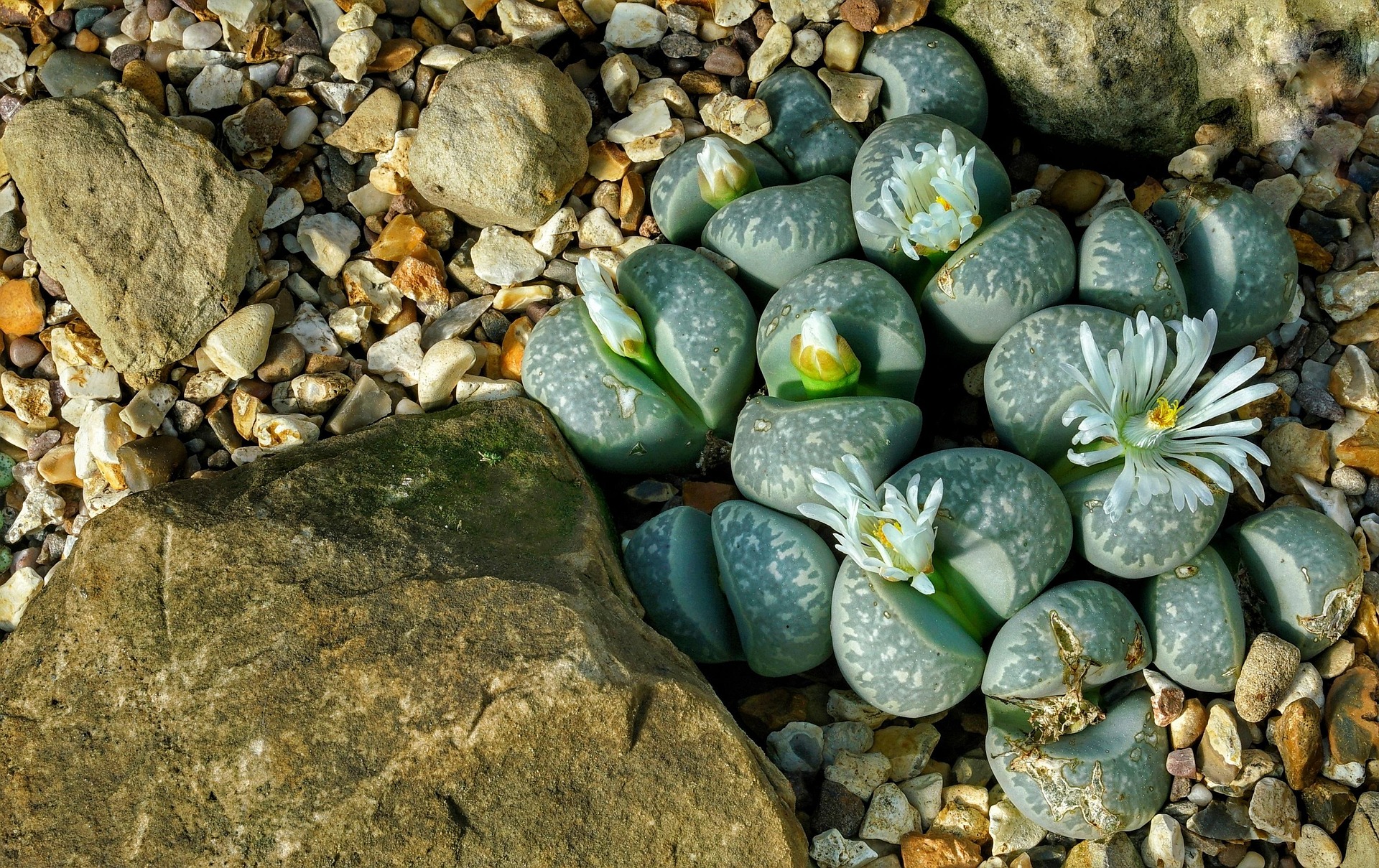
Lithops aucampiae is one of the more visually distinctive species in the genus, and once you've held one in person it becomes hard to misread. The body is broadly egg-shaped, with two fleshy lobes fused along a shallow to moderate central cleft. In a healthy, well-grown plant, the top surface (the so-called 'face' or 'window') sits nearly flush with the surrounding soil — Lithops in the wild are largely buried, with only the windows exposed to receive light.
Color is the first clue. L. aucampiae ranges from a warm chestnut brown to a deep coppery red, with some forms showing a slight olive cast. Unlike the chalky, almost lichen-like surface of L. karasmontana, the top of L. aucampiae is comparatively smooth and matte. Across the window you'll see dark, dendritic markings — fine branched lines that look like ink dropped onto wet paper — rather than the discrete spots of L. dinteri or the heavy island pattern of L. lesliei. A small percentage of plants in cultivation also show faint red 'rubrications,' short red dashes or dots scattered across the window edge; these are most pronounced under strong light.
Body size is on the larger end of the genus. Individual heads typically reach 25–35 mm across at maturity, and a long-lived plant in cultivation will slowly clump into a tidy cushion of 5–15 heads. The roots are thick and contractile — in habitat they actively pull the plant deeper into the soil during dry periods, which is why a deep pot is so important in cultivation.
Care at a glance
| Light | Very bright indirect light to several hours of direct morning sun; a south-facing window (in the northern hemisphere) or a grow light at roughly 25,000–40,000 lux. |
|---|---|
| Watering | Water deeply but infrequently during active growth in spring and autumn; allow soil to dry completely between waterings. Withhold water entirely while the new pair of leaves is forming inside the old one. |
| Soil | Extremely free-draining mineral mix — roughly 70–80% inorganic grit (pumice, lava, akadama, coarse sand) to 20–30% peat-free organic matter. |
| Dormancy | Mid to late summer (in the northern hemisphere). A shorter winter rest is also common in indoor cultivation. |
| Temperature | Tolerates 5–35 °C in cultivation; happiest between 10 °C and 28 °C. Avoid sustained frost. |
| Repotting | Every 3–4 years, ideally in early autumn before the new growth cycle accelerates. |
Growth & flowering
L. aucampiae follows the same single-cycle annual rhythm as the rest of the genus. In autumn (October–November in the northern hemisphere; April–May in the southern), a flower bud emerges from the central cleft. The flower is a large, daisy-like yellow bloom, usually 25–35 mm across, that opens in the afternoon and closes again at dusk. Flowering lasts a few days per head; clumping plants can produce a flush of blooms over two to three weeks.
After flowering, the plant rests through winter. Sometime in late winter or early spring the old pair of leaves begins to soften and a new pair pushes out from the cleft. This is the molt, and it is the single most important thing to understand about Lithops care: while the molt is in progress, the new pair feeds entirely on water and nutrients drawn from the old pair. Watering at this stage causes the old pair to stay turgid instead of shrinking, and the plant ends up with stacked, deformed bodies that resist molting properly in subsequent years.
Allow the old pair to wither completely to a papery husk before you resume watering — typically by mid- to late spring. The new body will look dehydrated and wrinkled at first; that's normal. A single careful watering once the husk is dry will plump it within a few days.
Common problems
Stacked or 'tower' growth
Fix: Caused by watering during the molt. Stop watering as soon as you see a new pair emerging from the cleft and don't resume until the old pair is fully papery and dry.
Etiolation (tall, pale, soft bodies)
Fix: Not enough light. Move to the brightest available window or supplement with a grow light. Increase light gradually over 1–2 weeks to avoid scorching.
Sudden soft, brown rot at the base
Fix: Overwatering combined with poor drainage. Unpot, cut away rotted tissue with a sterile blade, dust with sulfur or cinnamon, and allow the wound to callus for several days before repotting into a drier mineral mix.
Window cracks after a deep watering
Fix: Most often caused by watering a plant that had been dehydrated for too long. Resume with smaller, lighter waterings to let the body re-hydrate gradually.
Mealybugs in the cleft
Fix: A targeted spot-treatment with 70% isopropyl alcohol on a cotton bud, repeated every 5–7 days for three weeks. Inspect the roots when repotting — root mealybugs are common on Lithops.
Contributed by
Reviewed by the Appsbarn editorial team. Are you a grower of Lithops aucampiae? Co-author this profile.
Related species
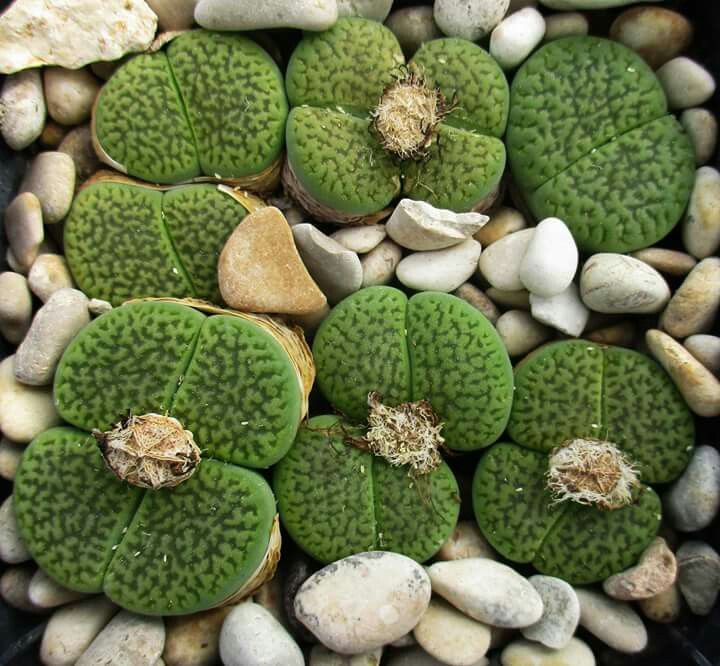
Lithops hookeri
Hooker's living stone
Large, robust, and highly variable — one of the genus's classic 'big' species.
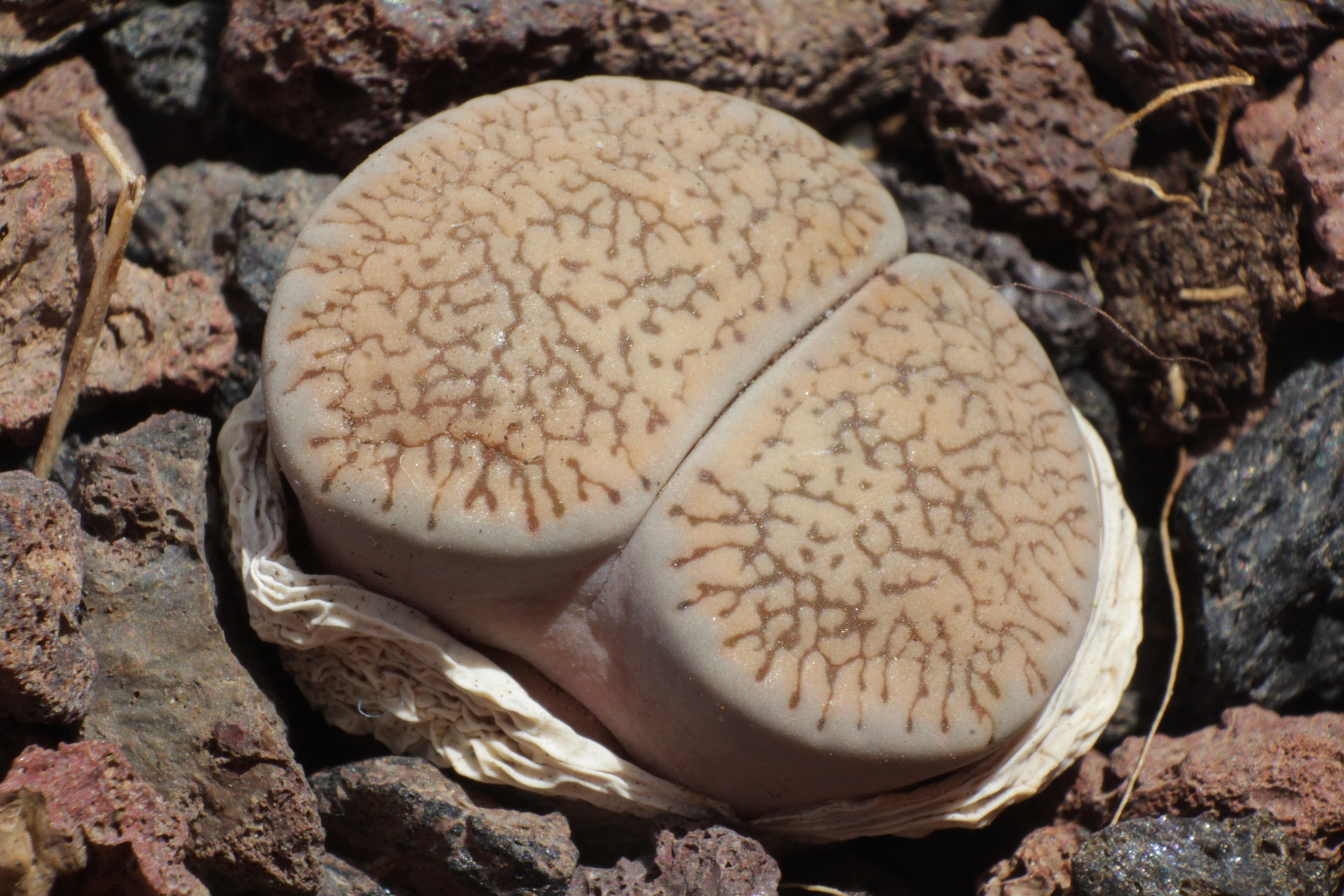
Lithops lesliei
Leslie's living stone
The single most widespread Lithops species — many subspecies and named forms.
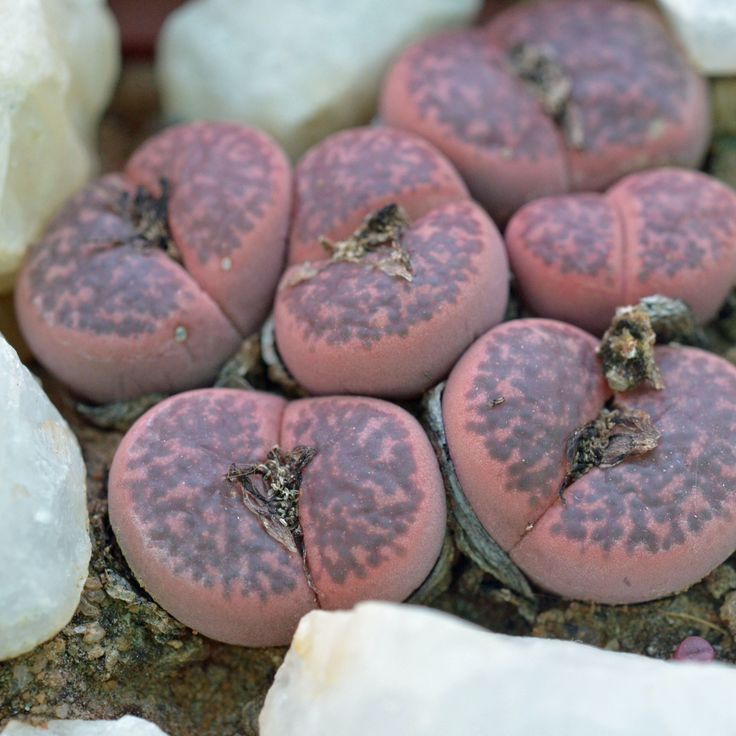
Lithops lesliei'Fred's Redhead'
Fred's Redhead
Selected cultivar of L. lesliei with intense brick-red windows.
Share your photo of Lithops aucampiae
We feature reader photos in species profiles, with credit. Submissions are reviewed before publishing.
Comments
Comments are moderated per our Community Guidelines. Please keep things on-topic — share your experience growing Lithops aucampiae.
No comments yet. Be the first to share your experience.