Identification & Diagnosis
Lithops julii subspecies: telling julii apart from fulleri
The two subspecies of L. julii look similar at a glance and are routinely mislabelled. Here is the short list of features that separate them reliably.
The genus-level signature
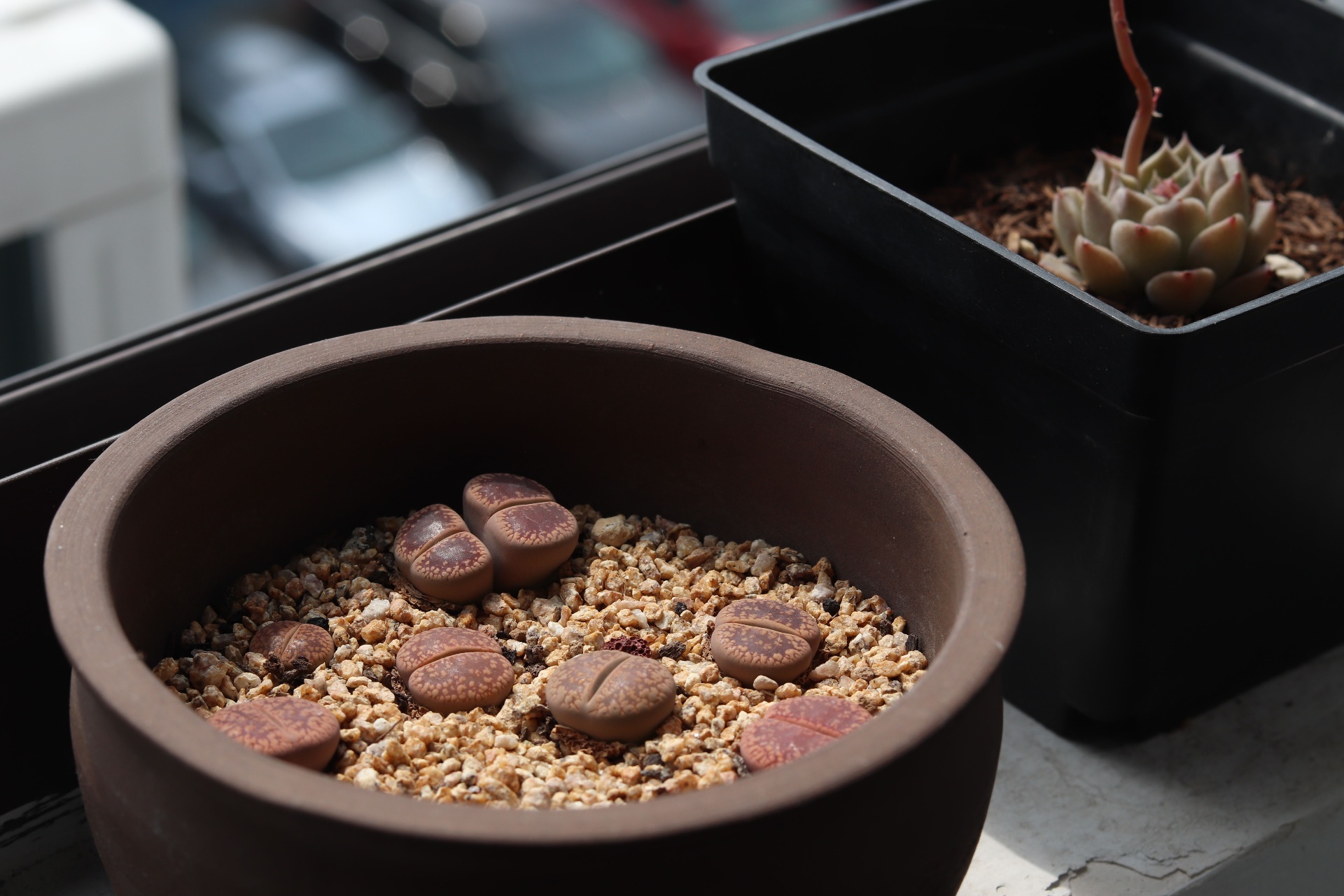
L. julii in any form is recognisable by the 'kissing lips' — a continuous, often dark line running along the cleft margin. That mark is the genus signature; both subspecies have it.
Where the two diverge is body proportion, window detail, and the colour of the cleft line itself.
ssp. julii
Body pinkish-grey to chalk-white, slightly taller than wide, window with a dense network of red-brown rubricated markings, cleft line typically brown to dark red. Populations are concentrated around the Karasburg district in southern Namibia.
ssp. fulleri
Body chalk-white to pale grey-green, often slightly wider than tall, window simpler — more open clear panels with finer red-brown veining, cleft line frequently a clean dark grey to almost black rather than red. Distribution further south, into the northwestern Cape.
Frequently asked questions
- Is the cleft line always present?
- Yes, in some form. If the cleft is featureless, the plant is likely not L. julii — check L. salicola or L. karasmontana before committing.
- Do they hybridise in cultivation?
- Easily, which is part of why nursery stock is so often hard to assign confidently.
- What about L. julii 'Hammeruby'?
- A cultivar selected from ssp. fulleri stock for a particularly clean, ruby-tinted window. It is a cultivated selection, not a wild population.
Keep reading
Written by the Editorial Team. Spotted an error or want to add a regional note? Send corrections or apply to contribute.